

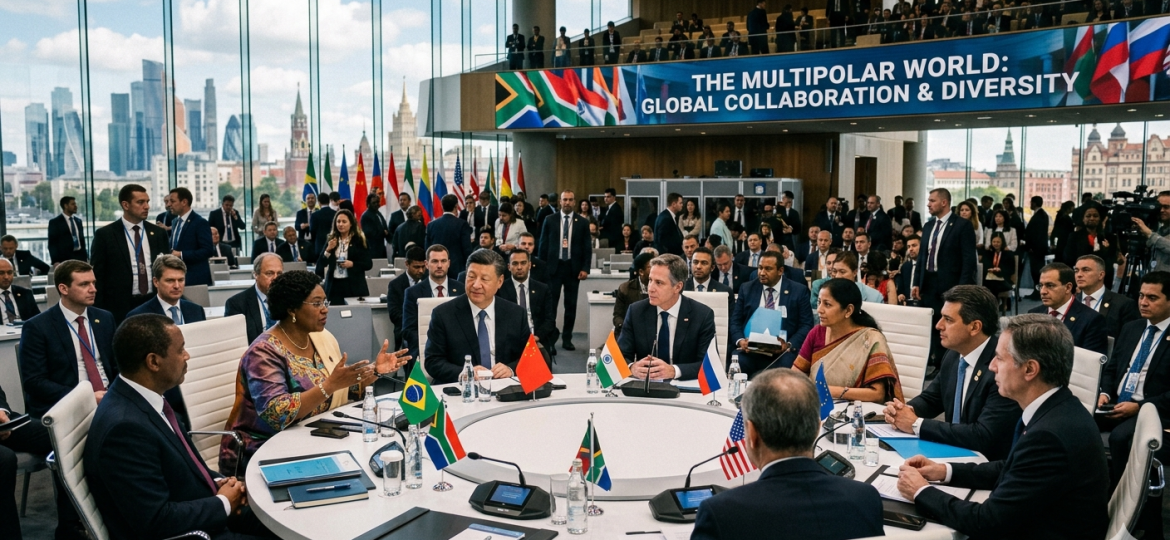
The international system is moving through a historic transition: from a largely unipolar order toward a multipolar structure in which several economic, regional, and financial powers influence global balances at the same time. This shift is not limited to foreign policy. It deeply affects trade, investment, technology, and capital architecture.
In a multipolar world, opportunities increase, but complexity rises as well. Businesses can no longer read the global market as a uniform space. They must understand regional interests, shifting alliances, different rules, and new decision-making centers. Competitive advantage comes from the ability to operate across multiple geographic axes without depending on a single direction.
Finance also reflects this evolution. New hubs, new regional reference currencies, new institutions, and new trade corridors are contributing to a gradual rebalancing of economic power. This is not necessarily a rupture, but a redistribution. And every redistribution creates opportunities for those able to move early and intelligently.
Understanding the multipolar world means accepting that global leadership will be increasingly shared and competitive. For investors and companies, this implies more analysis, more flexibility, and an international presence built with strategic intelligence.