

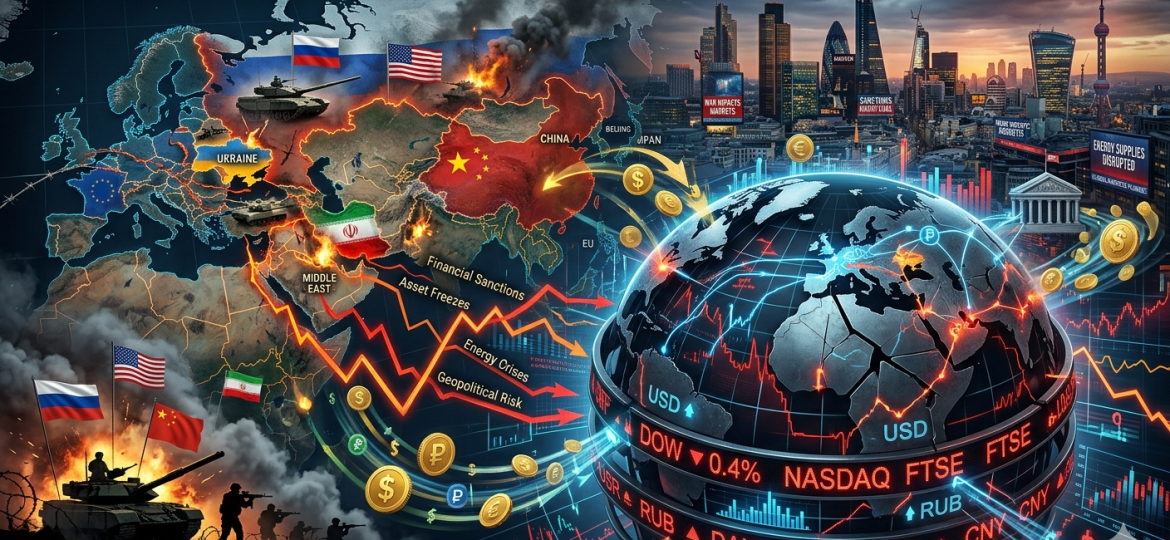
Finance has become one of the most powerful tools of modern geopolitics. Today, a conflict is not measured only on the battlefield, but also through sanctions, banking restrictions, insurance limitations, export controls, and access to international payment systems. Money, in other words, has become a strategic instrument of pressure and defense.
When a country or a major company is cut off from specific financial markets, the impact can be immediate: a higher cost of capital, reduced liquidity, slower foreign trade, and greater difficulty attracting investment. Supply chains are also affected because banks, insurers, and logistics operators often reduce their exposure to jurisdictions perceived as high risk.
This is why international finance is no longer a simple support function for the real economy. It is an operational arena where a decisive part of global balance is shaped. Market participants must read political risk with the same discipline they use to analyze balance sheets, rates, or returns. Geopolitical due diligence is now an essential component of any serious investment strategy.
In a period marked by fragmentation, the winners will be those able to build resilient financial structures, solid banking relationships, and access to multiple jurisdictions. Understanding the intersection between finance and geopolitics is no longer a specialist advantage. It is a requirement for anyone operating internationally.